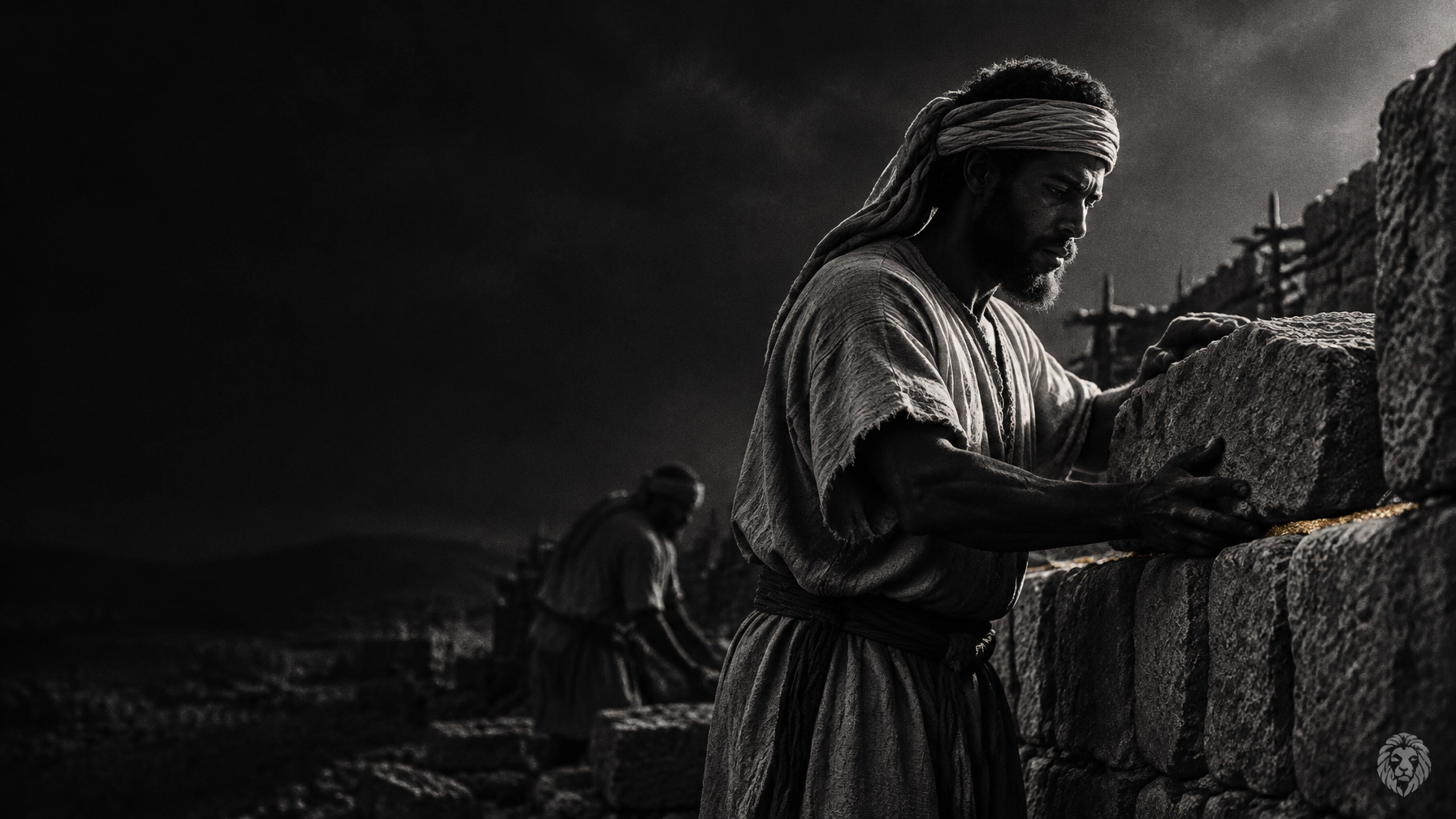
The start had energy. The finish has a picture. The middle has a deadline, a growing list of decisions, slow results, and no audience.
This is where many Kingdom Builders quietly step away. Not because the work stopped mattering, but because it stopped feeling rewarding. The biblical perseverance needed here isn’t hype or stubborn denial. It is sustained, wise obedience when progress is hard to see.
The middle isn’t a sign that you’ve missed your calling. It’s a stretch of the build where your character, methods, and support systems are tested. The goal isn’t to force a result. It’s to stay faithful to what’s yours to carry, while remaining willing to adjust how you carry it.
The Avodah Ecosystem is built on a clear conviction: Work Is Worship. That doesn’t mean every workday feels inspired. It means the way you build matters, including when nobody is clapping.
1. Name the Middle: Separate the assignment from the excitement
At the beginning, vision can feel self-explanatory. In the middle, it needs clear language. Write one sentence that names the work you are responsible for in this season.
Be specific. “Build my business” is broad. “Finish the service offer and test it with five potential clients” is workable. A clear assignment helps you distinguish between the purpose and the first version of your plan. Sometimes the calling remains steady while the tactic needs revision.
Ask yourself:
- What am I building?
- Who does it serve?
- What is the next meaningful milestone?
- What can change without compromising the purpose?
This is not a motivational exercise. It’s a decision tool. When the middle gets noisy, return to the sentence and check whether your next move serves the assignment.
2. Measure Faithfulness, Not Applause: Let the work count before it’s visible
A slow response from customers, colleagues, or an audience is information. It is not, by itself, a verdict on your worth or your calling. Track meaningful actions and honest signals: work delivered, conversations held, decisions made, feedback gathered, and problems solved.
Noach (Noah) is a picture of obedience before visible confirmation. Genesis 6–7 describes him building and preparing in response to God’s instructions before the flood arrived. The text centers on his faithfulness, not public recognition or an easy outcome.
For your own build, set a small number of measures you can influence. Review them at an agreed time instead of refreshing for approval throughout the day. If the results remain slow, look at the evidence and revise your approach without letting silence rewrite your identity.
The Kingdom Builder Consistency Protocol explores daily showing up. This protocol addresses a different challenge: staying oriented to the work across the long, unapplauded stretch.

3. Shrink the Horizon, Keep the Vision: Choose the next useful milestone
A long project can feel impossible when you try to carry its whole future at once. Keep the larger vision, but make your immediate horizon smaller. Define what “forward” means over the next two weeks: a draft ready for review, a conversation with a partner, a decision documented, or a process tested.
Rut (Ruth) shows the significance of ordinary, grounded choices. In Ruth 1–2, she remains loyal to Naomi and works by gleaning in the fields. Her story doesn’t present a shortcut to success. It shows a woman making faithful decisions amid uncertainty and relying on relationships and community.
Your next step may be less impressive than your vision. That doesn’t make it trivial. The Focus Protocol can help you protect attention for deep execution. Here, use that attention to identify the next milestone that genuinely serves the build, not just the task that makes you feel busy.
4. Rebuild the Load: Treat wise limits as part of the architecture
Perseverance is not the same as grinding without limits or ignoring rest, health, and wise counsel. Exhaustion can distort judgment. A plan that depends on you carrying everything alone is not a sustainable plan.
Mosheh (Moses) led the people through a wilderness stretch between deliverance and arrival. Exodus 18:17–23 records Jethro advising him to share responsibility and appoint capable leaders. The passage offers a practical reminder: delegated leadership can serve the work. It isn’t automatically a retreat from it.
Review your load before it becomes a crisis:
- What must I own personally?
- What can I delegate, delay, simplify, or stop?
- What rest or care needs to be protected?
- Who can give me truthful counsel?
Rest, medical care, trusted support, and appropriate professional help are not evidence of weak faith. If persistent exhaustion or hopelessness is affecting your ability to function, reach out to qualified support rather than trying to solve it with more pressure.

5. Respect the Season: Don’t confuse delay with disqualification
A long wait can make the work feel like a mistake. Before you conclude that, distinguish between what has been delayed and what has been redirected. Ask what remains true about the purpose, what has changed in the conditions, and what the season now requires.
Kalev (Caleb) asked for the hill country in Joshua 14, decades after the wilderness journey began. His story is one of long faithfulness, not instant payoff. It doesn’t promise that every long-held ambition will unfold as imagined. It does show that a person can continue to trust and serve through changing seasons.
The Discipline Engine addresses the role of habits in meaningful work. Use discipline here not to force a timeline, but to keep your decisions aligned with your values as the season changes.
6. Tell the Truth About the Cost: Make room for lament and counsel
Endurance does not require pretending that the work is painless. Honest prayer, a hard conversation, or a request for help may be the faithful next step. Don’t turn distress into a character flaw or assume that suffering proves you chose the wrong path.
Iyov (Job) endures profound suffering, and his story includes grief, protest, and difficult questions. It does not justify assuming that suffering is punishment or something to manufacture for growth. His relevance here is modest but important: faithful endurance can include speaking honestly about pain.
Name what is difficult without making it the only truth. Then ask for help with a real problem: a decision you can’t resolve alone, a workload that needs rebalancing, or support for the strain you’re carrying.
7. Finish With Grace: Define completion before the finish line arrives
A meaningful finish is not always a dramatic reveal. It may be delivering work with integrity, completing a season, documenting what you’ve learned, or recognizing that the assignment has changed. Decide in advance what faithful completion looks like, so the finish line isn’t dictated by applause.
Sha’ul (Paul) wrote, “I have finished the race” in 2 Timothy 4:7. His words point to faithful completion, not a life without hardship. They invite a practical question: what would it mean to finish this season honestly and well?
If you’re tempted to quit, don’t make the decision from one bad afternoon. Review the purpose, the evidence, your health, and the counsel of people you trust. Vision without execution is fantasy, but execution without discernment can become needless harm.

The Middle Is Part of the Architecture
Biblical perseverance isn’t a trick for getting the outcome you want. It is faithful, honest action over time, held together with wise limits, community, and trust. It lets you work without requiring constant applause, adjust a method without abandoning a purpose, and rest without treating rest as failure.
That is what it means to be Built Different and Called to More: not to push without end, but to build with integrity through every season. The middle is not the whole story, but it is part of the formation.
For a listening companion during focused work or reflection, explore Avodah Sound, including its Deep Focus soundscape.
Take the Middle Marker
Join the 100-Day Tribal Challenge and complete a one-page Middle Marker:
- Pick the one build you’re most tempted to abandon.
- Write what the next 30 days of that build look like.
- Name two witnesses or accountability people.
- Define what “still standing” looks like at day 100.
Keep it honest. The measure isn’t whether everything goes to plan. It’s whether you can name the next faithful step, receive support, and keep building with wisdom.
FAQ: Biblical Perseverance Through the Middle
What is biblical perseverance?
Biblical perseverance is sustained faithfulness through difficulty and delay, with dependence on God, honesty about hardship, and room for wise change. It isn’t a guarantee of a particular outcome.
How can I practice biblical perseverance when progress is slow?
Clarify the assignment, identify the next meaningful milestone, and review evidence at a set time. Seek counsel, protect your health, and adjust your methods when the facts call for it.
Does perseverance mean I should keep going no matter what?
No. Wise perseverance is not relentless grinding. Rest, shared responsibility, professional support, and even a change in direction may be necessary.
How is this different from consistency?
Consistency focuses on showing up repeatedly. This protocol focuses on navigating the difficult middle of a long build: staying oriented, adapting wisely, receiving support, and defining what faithful completion means.
Leave a Reply